Welcome to United Shine


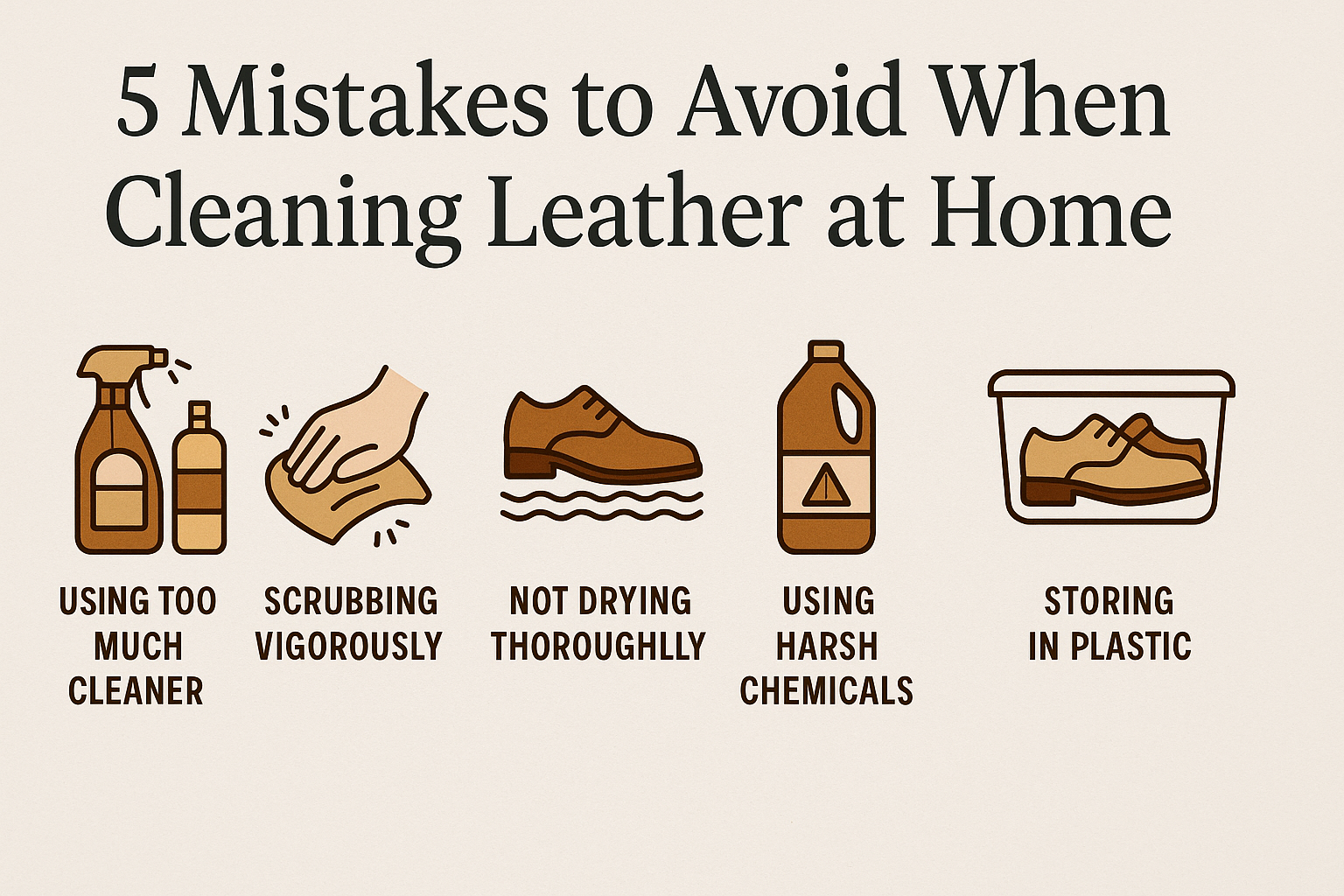
More is not always better — especially when it comes to leather cleaners.
Why it’s a mistake: Over-saturating leather with liquid can lead to staining, weakening of the leather fibers, or mold buildup if not dried properly.
What to do instead:
Use a small amount of leather-specific cleaner on a soft cloth. Always test on an inconspicuous area first.
It might be tempting to scrub away stains, but this can do more harm than good.
Why it’s a mistake: Aggressive scrubbing can scratch or tear the leather’s surface and remove natural oils, leading to cracking.
What to do instead:
Gently wipe the leather in circular motions with a damp cloth or sponge. For tougher spots, use a soft-bristled brush with mild pressure.
Moisture is the enemy of leather if left unchecked.
Why it’s a mistake: Damp leather can grow mildew, smell musty, or warp over time.
What to do instead:
After cleaning, gently blot excess moisture and let the leather air dry in a well-ventilated space. Avoid direct heat sources like hairdryers or sunlight.
Household cleaners might work on other materials — but not on leather.
Why it’s a mistake: Chemicals like bleach, alcohol, or ammonia strip natural oils, causing discoloration and brittleness.
What to do instead:
Stick to products formulated specifically for leather care. Avoid multi-surface or all-purpose cleaners.
Where and how you store your leather matters just as much as how you clean it.
Why it’s a mistake: Leather needs to breathe. Airtight plastic containers trap moisture, leading to mildew and a stale odor.
What to do instead:
Store leather items in cloth bags or breathable containers. Use cedar inserts or shoe trees to absorb excess moisture and maintain shape.
When in doubt, go minimal. Clean gently, use the right products, and avoid over-handling your leather. With proper care, your leather items can stay beautiful and functional for decades.
